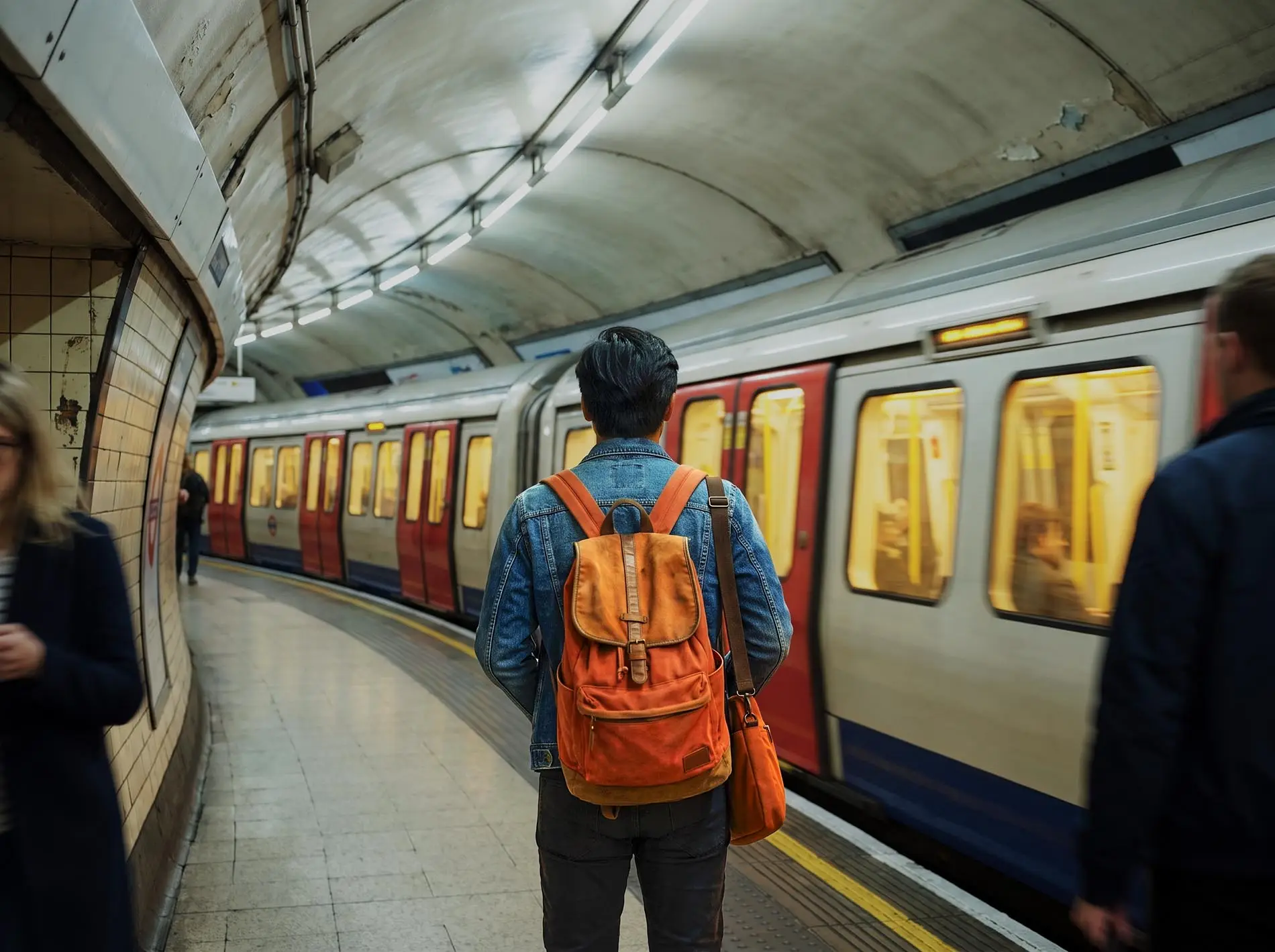
London student transport runs on one simple system. You pay with an Oyster card or contactless, and daily and weekly caps limit what you spend. The real savings come from two decisions: choosing the right way to pay for how often you travel, and choosing accommodation with an easy route to campus.
How fares work on London’s network
The Tube, buses, trams, DLR, London Overground, the Elizabeth line and most National Rail services in London share one fare system run by Transport for London (TfL). You can pay with an Oyster card, a contactless bank card, or a phone or smartwatch.
Rail fares depend on the zones you travel through and the time of day.
Zone 1 covers central London, and the zones spread outwards in rings.
Peak fares apply on weekday mornings and late afternoons. Off-peak fares are cheaper.
Bus and tram fares work differently. Every bus journey costs the same flat fare, however far you go.
Capping sets a maximum you can pay in a day or a week. Once you reach the cap, further journeys are free for the rest of that period. Weekly caps on pay as you go always run Monday to Sunday. A 7-day Travelcard is different: it can start on any day.
Three habits that prevent overcharging
Most extra charges come from small mistakes, not from the fares themselves.
- Touch in and out on rail. If you forget to touch out on the Tube, Overground, DLR or Elizabeth line, the system charges a maximum fare. On buses, you only touch in.
- Use the same card for every journey. Caps only count journeys made with one card or device. Switching between your phone and your bank card means neither one reaches the cap.
- Keep cards apart at the reader. If you hold a wallet with two cards against the reader, it may charge the wrong one. TfL calls this card clash.
Student discounts and what they cover
The 18+ Student Oyster photocard gives 30% off adult-rate Travelcards and Bus & Tram Passes, from seven days upwards. It is for students aged 18 or over who live in a London borough during term time and study at a university or college registered with TfL. You apply online and upload a photo, and your institution confirms your enrolment. There is a one-off application fee, and the card stays valid until your course ends.
One detail catches many students out: the Student Oyster discount does not reduce pay as you go fares. If you mostly tap in and rely on capping, the photocard only saves you money once you buy a Travelcard or a pass.
A railcard covers the gap. A 16-25 Railcard, or a 26-30 Railcard for older students, gives one third off most rail fares across Great Britain. Add it to your Student Oyster photocard or a standard Oyster card at a station. You then get one third off off-peak pay as you go fares and off-peak daily caps on the Tube, London Overground, Elizabeth line and most National Rail services in London.
Contactless cards and phones cannot carry either discount. If you want a student or railcard reduction in London, you need an Oyster card.
Choosing the right way to pay
The cheapest option depends on how often you travel and when.
This table sums up the usual fit.
| Your travel pattern | Option that usually fits | Why |
|---|---|---|
| Tube or rail two or three days a week | Pay as you go (Oyster or contactless) | You only pay on days you travel, and capping limits busy days |
| Tube or rail most weekdays, same zones | 7-day or monthly Travelcard on a Student Oyster photocard | If your weekly travel would reach the cap, the 30% discount makes the Travelcard cheaper; if not, pay as you go usually costs less |
| Mostly buses | Pay as you go, or a Bus & Tram Pass on a Student Oyster photocard | Buses have a lower cap, and a discounted pass suits daily bus users |
| Mostly off-peak journeys | Student Oyster photocard or Oyster card with a 16-25 or 26-30 Railcard added | One third off off-peak fares and daily caps |
| Short trips in central London | Walking or Santander Cycles | Many central stations are closer on foot than the Tube map suggests |
Compare your actual weekly spending after your first few weeks. Your timetable, part-time work and social life will show which option suits you best.
Buses, the Hopper fare and getting home at night
Buses are often the cheapest way to cover short distances. The Hopper fare lets you make unlimited bus and tram journeys within one hour of your first touch in, all for the price of one fare. Two buses with a change in between cost the same as one.
Night buses run across London every night of the week. On Friday and Saturday nights, the Night Tube runs on selected lines. During the week, night buses are usually the way home after a late shift or an evening out.
For route planning, TfL Go and Citymapper show live times and compare routes across buses, Tube and rail.
TfL also publishes step-free access maps. These help if you have mobility needs or are moving in with heavy luggage.
Transport starts with where you live
Your address affects your travel costs more than any card or app. It decides which zones you cross, how many changes you make, and whether a night bus gets you home.
Check these points before you book a room:
- Nearest station and its lines. A station with a direct line to your campus can matter more than a short walk to a station that needs two changes.
- Zones between home and campus. Every extra zone on a regular route raises your daily and weekly costs.
- Bus alternatives. A direct bus route gives you a cheaper backup when the Tube is disrupted.
- Night routes. Check whether a night bus or Night Tube line serves the area, especially if you work evenings.
- Every campus you will use. Several London universities teach across more than one site. Check the route to each one, not only the main campus.
Lower rent further out can be offset by higher transport costs. Higher rent near a direct line can be offset by cheaper, shorter journeys. Compare the two together, not separately.
Comparing accommodation by commute
When you search for a room, start from your campus rather than a postcode.
On Hallbookers, each university page lists nearby student accommodation by distance from campus.
You can see an example on the Queen Mary University of London page. Every listing also has a Nearby universities panel showing distance and travel time from Google Maps.
To browse the whole city, a directory such as Hallbookers’ London student accommodation page brings independent and purpose-built options together in one place. Shortlist a few rooms, then plan each route in TfL Go at the time of day you would actually travel.
Get these steps right early, and London student transport becomes one of the easiest parts of university life to manage.
For current fares and caps, check the TfL fares page before you choose a card or pass.
Frequently asked questions
Is Oyster or contactless better for students in London?
It depends on how you travel. If you only pay as you go, both cost the same and both cap your spending, so contactless is simpler. You need an Oyster card for discounts: only Oyster can hold the 18+ Student Oyster discount or a 16-25 or 26-30 Railcard discount.
Does the Student Oyster photocard give a discount on pay as you go?
No. The 30% discount applies only to Travelcards and Bus & Tram Passes of seven days or longer. Pay as you go journeys cost the standard adult fare, unless you add a 16-25 or 26-30 Railcard for off-peak travel.
Can I use a 16-25 Railcard on the Tube?
Yes, for off-peak journeys. Add the railcard to your Student Oyster photocard or a standard Oyster card at a station. You then get one third off off-peak pay as you go fares and off-peak daily caps on the Tube, London Overground, Elizabeth line and most National Rail services in London.
Do I need to renew my Student Oyster photocard every year?
No. The 18+ Student Oyster photocard stays valid until your course ends. If you leave your course early or don’t re-enrol, your university informs TfL and the card is stopped.
What happens if I forget to touch out?
You may be charged a maximum fare for that journey. If this happens, you can check your journey history and request a refund through your TfL account.
How do I get home late at night in London?
Night buses run every night across London. On Friday and Saturday nights, the Night Tube also runs on selected lines. Plan your route in TfL Go before you head out.
How do I find student accommodation with an easy commute?
Start from your university. Hallbookers university pages list nearby accommodation by distance from campus. Each listing’s Nearby universities panel shows travel times from Google Maps.
The image in this article was generated with AI.

